
InfraRed B&W photography of the vast, intimidating, and inspiring expanses of the American Southwest.
Home About InfraRed Gallery Book Series Bibliography Contact
More Galleries:
Florida My Eden Shades Of Vanity Unyielding Vastness Somatic Canvas
What is InfraRed
Infrared photography is quite literally the capturing of invisible light.
It requires special equipment and skills that are altogether different than that of traditional photography.
ABOUT B&W “INFRARED” PHOTOGRAPHY
“Infrared” photography captures light that is otherwise invisible to the human eye. The Infrared spectrum lies between the visible light and heat radiation. The human eye can see wavelengths from about 400nm-700nm (from purple to red); infrared is the light beyond 700nm. IR photography can be done with either infrared film, or a digital camera, and typically involves near infrared light in the 700nm to 1200nm range. This is different than thermal infrared, which images far into the infrared spectrum.
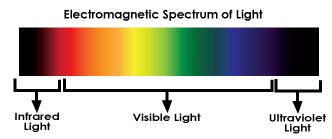
The above is the technical explanation. From an artistic point-of-view, Infrared photography captures what we perceive, but do not see. Infrared photography captures the ethereal qualities of light. It allows us to see what we otherwise experience, mostly unaware of the beauty of the intense radiant light and its resulting shapes and shadows.
For the art photographer, Infrared film or digital capture provide some very distinct effects which make them aesthetically pleasing. The most striking difference is the “Wood Effect”, an effect where leaves reflect light giving them a bright white look. This effect is named after the photographer Robert W. Wood, who is considered the father of infrared photography. This effect is utilized for landscape photography where it can be used to produce surreal color landscapes or high contrast B&W photographs. The chlorophyll of the foliage can be seen glowing as it takes in the energy of the sun. Waterways become large mirrors as light bounces off them reflecting images of the tropical world above. Shadows are revealed as deep, humid, and dark.
About Infrared Photography
Infrared photography is not a novelty of optics—it is a confrontation with the boundaries of human vision. It asks: What is light, really, when it is no longer visible? And more importantly, what do we become when we dare to see it?
To photograph in the infrared spectrum is to document a reality just beyond the grasp of the eye—light that begins where our perception ends. Technically, this means capturing wavelengths beyond 700 nanometers, where foliage glows, skies darken, and water turns to shadow. This reversal of expectation is not a gimmick. It is a reframing of truth.
Infrared demands that the photographer transform not only the equipment, but the self. A conventional camera must be modified to bypass the filters that block this invisible light. But once this is done, the world is rendered in a new grammar: trees turn to silver; grass becomes mist; clouds sharpen like brushstrokes against obsidian skies. The famous “Wood Effect”—named after physicist Robert W. Wood—reveals chlorophyll as a mirror for sunlight, turning life itself into a source of luminous contrast.
This isn’t just science. This is metaphor. This is mythology.
To practice infrared photography—particularly in landscapes as indifferent and sublime as the American Southwest—is to enter a dialogue between material and mystery. The desert becomes spectral. The familiar becomes forgotten. The image becomes the trace of a world the naked eye was never meant to see.
And so we look.
We look not to capture the world as it is, but to invoke what it almost is—to render what it feels like to be alone under a sky that does not care, amidst a land that will not yield. Infrared, like all alternative photographic processes, slows us down. It demands patience. It calls for a kind of reverence.
This volume, Unyielding Vastness, curates a vision made possible by technology but animated by loss, solitude, and artistic hunger. These are not images taken. They are visions returned.
The desert revealed them.
I have only arranged them here for your encounter.
— L.M. Echoe
Curator, Witness, Apparition

Unyielding Vastness is just one of AE Samaan's InfraRed Black and White photography projects. Please visit these other art projects: